

Have you ever heard about the people who went on to change the world? This blog series tells the stories of amazing Jewish women who made history. We talk about their strength, how they worked hard in science, and how they did not give up, even when things were tough. These women found out new things about the universe and helped make medicine that saves lives. They have left a mark that will be there for a long time. Get ready to feel inspired by the strong journeys of these women and see how what they did can help the next group of thinkers and leaders. For more stories and information about the Jewish Women Series, visit jewishwomenseries.com.

Jewish women have had a big part in helping shape both science and society, mostly in the United States. The work they did has helped to grow what we know and also gave new chances to everyone. A lot of these women became part of the National Academy of Sciences and were on top groups like the National Research Council.
These women were not only smart; they were also bold. They stood up to old ways of the scientific community and showed that anyone can be strong, smart, and driven—no matter if you are a man or a woman. Their lives and work show what people can do if they really care. We can look at how they got past big roadblocks, gave hope to others, and see why it is so good and needed for people to know their stories.
Many Jewish women in science had to face great challenges, especially during World War II. Some, like Rita Levi-Montalcini, were not allowed to work in schools or labs because of the laws against Jews at that time. She did not stop working. Instead, she kept doing her research in secret. She even used her bedroom as a lab so she could keep studying chicken embryos. This shows her strong will to keep going even when things got tough.
Many times, these women were the only woman in the lab or classroom. They had to deal with people thinking less of them and were often turned down for chances that their male coworkers got. It was hard for a woman, especially a Jewish woman, to get into some schools or to win a research fellowship.
Even with all these problems, they did not give up. Their drive helped them make big findings and show what they could do. The world can learn a lot from their stories. They showed how far people can go if they do not give up on their dreams. Their wins made things better for all the female scientists who came after them.
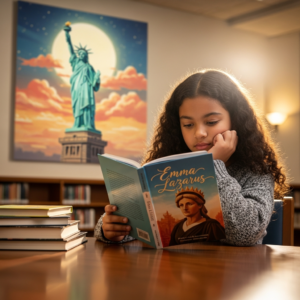
Telling kids about amazing people is a good way to inspire them. Many know names like Emma Lazarus or Juliette Gordon Low, but the stories of Jewish women in science are just as important. These stories help young Jewish girls see that they can do big things in any field they like.
Take Rosalind Franklin for example. Think about her as a scientist who took an important photo, called “Photo 51.” It was like a secret plan that showed how DNA looks. This photo helped other scientists learn that DNA is shaped like a double helix, or a twisted ladder. Even though Rosalind Franklin didn’t always get the credit she deserved while she was alive, her work was key. Telling this simple story can help young children feel the excitement of learning new things.
By sharing stories about these role models from the United States and the United States of America, and other places too, we can make young people curious. The story of the first woman to do something special or discover something new can inspire them. These stories show the value of passion and hard work, and that anything can happen with the right drive.
It is very important for girls in high school to see a female scientist who looks like them or has a similar background. This is because representation shows what can be done. When a young girl sees women who are working in science, technology, engineering, and math, it helps her see that she can do it too.
Having people to look up to is very helpful in this way. You can tell someone that they can do anything, but seeing a person who has done it is much stronger. For Jewish girls, this is even more special. They can feel proud and strong because of what great Jewish women did before them.
Here are some ways you can use representation to help girls:
 A great science idea often starts at home. Many Jewish women who made history found their early spark in their family, faith, and people around them. Jewish values talk about learning, asking questions, and fixing the world (Tikkun Olam). These give strong ground for someone to go into science.
Family and people in the community can help a lot. When a child is told to be curious and try things, it makes them feel sure about what they love. Now, we will see how these ideas helped these women become who they are.
Jewish values can help shape strong leaders. In Jewish culture, there is a big focus on education and thinking deeply. From a young age, kids are told to ask “why?” and try to learn new things. This helps them build a scientific mindset. It lets them grow their own curiosity.
Faith can give strength and push people forward. The value of Tikkun Olam means fixing the world. This idea can make someone want to use science to help others. It can be a good reason to work in medicine, environmental science, or other fields that support people and the planet.
Parents can help their daughters connect these values with science. You can show how working in medical research helps heal sick people. Or how an engineer works to fix problems in the community. When you talk about science as a way to live out Jewish values, it can spark a true love for leadership and learning new things.
Growing up as a Jewish person in the United States brings together a mix of culture, tradition, and who you are. Many of the women we talk about found help from the Jewish community when they were young, but they also faced hard times. In cities like New York, where many Jewish people live, there has always been a lot of creative and smart people coming together.
For young children, it helps to share simple facts. For example, Gertrude Elion was a Jewish woman from New York who helped make medicine to fight bad illnesses. You can also tell them about Judith Resnik. She was a Jewish astronaut who got to travel in space on the Space Shuttle. These kinds of facts can help young children understand that big things are possible for them, too.
Stories like these show that being part of the Jewish community can make you stronger. The things people share and learn together can help them reach for more in life. Even when there was unfair treatment, many of these women leaned into the strength from their background and reached their goals. They ended up making a real mark in the world.
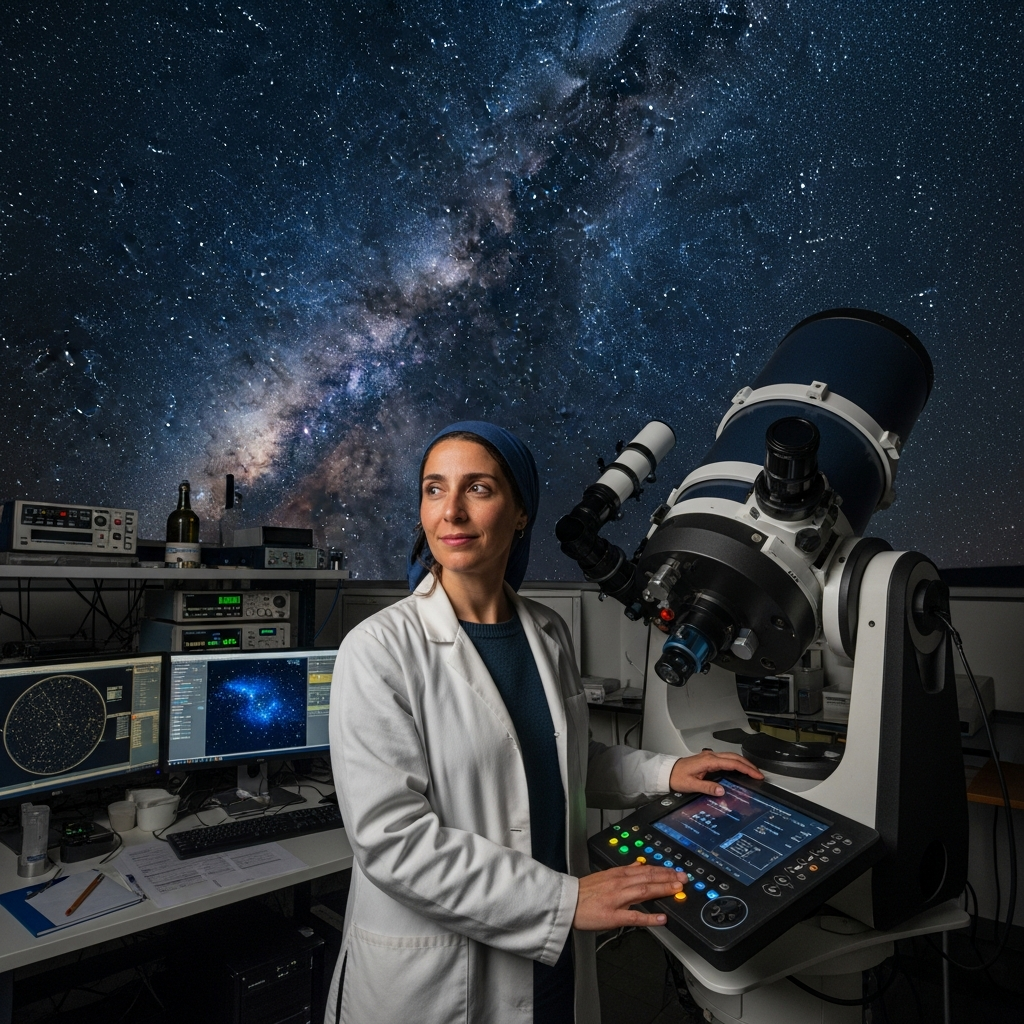
How do you turn a child’s love of asking questions into a lasting love of science? It starts when you help them keep their sense of wonder. Many well-known scientists first got interested in science by asking simple questions about how things work. This is how the journey toward scientific research often starts.
It’s very helpful for kids to have role models. When young girls see women being known for what they know and find out, it gives them hope. It shows them that their questions matter and that they can also help others understand the world.
To help Jewish girls get excited about science, here are some things you can do:
 Many Jewish women have had a big role in science. They have won awards like the Nobel Prize and the National Medal of Science. Their work in medical research and other areas has saved lives and changed how we see the world. These women are true pioneers.
The path was not always easy for them. But their smart ideas and hard work led to great things. Now, let’s look at some of these important scientists. You will learn about an astronomer who showed proof for dark matter, a Nobel laureate who changed medicine, and a chemist who helped us learn more about DNA.
Vera Rubin was a Jewish scientist who made a big discovery. She looked at how galaxies move. She saw that stars at the edge of a galaxy went just as fast as stars in the center. That does not make sense if you just go by the things you can see.
She thought about this and came up with a new idea. She said there had to be something in space we can’t see, giving more pull. She called it dark matter. This changed the way people think about space. Now we know most of the universe is filled with things we can’t see.
Her work was so good that she got chosen for the National Academy of Sciences. The New York Times wrote about her, too. Vera Rubin’s story shows kids that big findings often come when you notice things that seem odd, and then ask questions about them.
Gertrude B. Elion is a big name in medical research. When she lost her grandfather to cancer, she made up her mind to help find new ways to fight diseases. She was a smart chemist and she came up with a new idea called “rational drug design.”
This new method did not use guesswork. She and her team took time to look at how bad cells work. Then, they made drugs that could stop these cells without hurting good ones. Because of this, they created important medicines for leukemia, herpes, and gout. This same idea also helped to make AZT, which was the first drug doctors used to treat AIDS.
Gertrude B. Elion got the Nobel Prize for her medical research in 1988. Her work with rational drug design is as important as the discovery of nerve growth factor. What she did has helped save millions of lives. It made her one of the top names in medicine today.
Rosalind Franklin was a smart Jewish scientist. Her work was very important to understanding the structure of DNA, which is one of the biggest secrets in science. She worked with her student, Raymond Gosling. Together, they used X-ray diffraction to take pictures of DNA. One of these pictures, called “Photo 51,” was the clearest anyone had ever seen.
This photo gave big clues about DNA. It showed that the molecule was a double helix, like a twisting ladder. But without her knowing, someone showed this photo to James Watson and Francis Crick, who were working on the same problem. The photo helped them build their own model of DNA’s structure. Later, they won the Nobel Prize for this work.
Sadly, Rosalind Franklin died before the Nobel Prize was given. For a long time, people did not fully know about her role in this story. Her life reminds us all how important it is to give people credit for what they do. Rosalind Franklin was a woman whose work changed science for the better, and she should always be remembered.
When people think about space exploration, most think about male astronauts. But Jewish women from the United States have also had a significant role in this journey. They have been part of the team both in space and on the ground. Some were the first women of their faith to go to space. Others have helped with important research here on Earth.
These pioneers have broken barriers and made it easier for others to dream big. They have shown what is possible when we look up at the sky and reach for more. Now, let’s talk about some of these incredible women who have gone beyond Earth and helped us learn more about space.
Judith Resnik was the first Jewish woman and the second American woman to go to space. She had a Ph.D. in electrical engineering and worked as a research scientist before she joined NASA’s group of astronauts in 1978. She was part of the first group that allowed women to be astronauts.
Her first flight was on the Space Shuttle Discovery in 1984. On that trip, she used the shuttle’s robotic arm. She did this with great skill. Judith worked hard and many people looked up to her. She became a trusted part of the team and a role model for new scientists and space explorers.
Judith Resnik’s life ended in the Space Shuttle Challenger accident in 1986. Even though she died so soon, people still remember her for her boldness and her mind. She broke new ground for women in space travel and her story still inspires people today.
While some Jewish women traveled to space, others made crucial contributions to space programs from the ground. Tibby Cotler was a research scientist whose work was vital for NASA. She specialized in materials science, ensuring that spacecraft could withstand the extreme conditions of space.
Her research helped improve the safety and reliability of various missions. As a dedicated scientist, her contributions were part of the vast, collaborative effort that makes space exploration possible. Women like Tibby Cotler are the unsung heroes of the space program, working behind the scenes to push the boundaries of human achievement.
Her work highlights the diverse roles women play in STEM. Not every hero wears a spacesuit; many, like Tibby Cotler, make their mark through meticulous research and dedication.
| Contributor | Field | Key Contribution |
|---|---|---|
| Tibby Cotler | Materials Science | Developed and tested materials to ensure the safety and durability of spacecraft. |
| Judith Resnik | Astronaut, Engineer | Second American woman in space; operated the Space Shuttle’s robotic arm. |
Jewish women have done more than send people into space. They have helped with missions that study “Our Planet.” Scientists use satellites and probes to check Earth’s climate, oceans, and air. They also look at other planets in our solar system.
These women use their skills to design tests. They read and explain what the data means. Many have been on advisory boards with groups like the National Research Council. They help plan where these missions will go next and how we study planets. Their work is key when we try to know our place in the universe.
Jewish women work as engineers and scientists. They help build tools and study results. They have been leaders in space science. Because of them, we learn how to keep our planet safe and look at new worlds. This keeps the Jewish research council and national research council tradition alive in helping us learn and discover more.
Many Jewish women in science had a tough road to success. They went through a lot, facing things like being left out of schools and often being the only woman working with a group of men. These hard times made things very tough for them, but did not stop them from going after knowledge.
What really stands out in their stories is how hard they kept trying. They fought to get into schools, to do work in their field, and to make sure people listened to them. Let’s look at what these challenges were in their work and talk about the strength it took for them to win.
Getting an education was a big struggle for many. There were quotas at universities that kept the number of Jewish students low. It was also very hard for women to get into fields like science and medical school. For example, Rita Levi-Montalcini had to deal with laws in Fascist Italy that stopped Jewish people from working at schools.
After these women finished school, things did not get much easier for them. Their work life was full of obstacles. They did not get picked for big roles or promotions. As graduate students or when they worked as junior researchers, people did not listen to their ideas, or sometimes men even took the credit for those ideas. Many times, she was the only woman in the group, which could feel lonely.
These women put in double the effort to show what they could do. They felt like they had to be smarter, work harder, and stick with it, just to be seen the same as others. The fact that they were able to reach success, even with all this going on, shows their strong will and real talent.
The stories of Jewish women in science show real strength, steady effort, and winning in the end. They did not let blocks keep them down or hold back their dreams. When one path was closed, they found a new way to keep working. Some worked at home in their own labs, while some looked for chances in other places or countries.
One of these women was Rita Levi-Montalcini. She is a strong example for us all. Losing her job at a university did not stop her. She set up a small lab right in her bedroom to keep up her work. She showed a deep love for science, and because she never gave up, her work led to the Nobel Prize. Her life story tells us that when a person is strong and set on their goal, no block is too big.
These women moved past blocks by:
No one gets very far by themselves. Many Jewish women who led the way in their fields had help from mentors and support networks. Having a research professor who cares or friends with the same goals can give the push people need in a hard area.
These close ties gave more than just teaching at work or at school. They gave emotional help, brought the group closer, and let people together share their thoughts and problems in a safe place. Mentors can help people get new chances, say good things about them for jobs, and stand up for their work. For example, Gertrude B. Elion went on to become an adjunct professor of pharmacology so she could help teach and guide the people coming after her.
Parents and those around us have ways to help build this kind of network for young girls to reach for more. Here are some things to do:
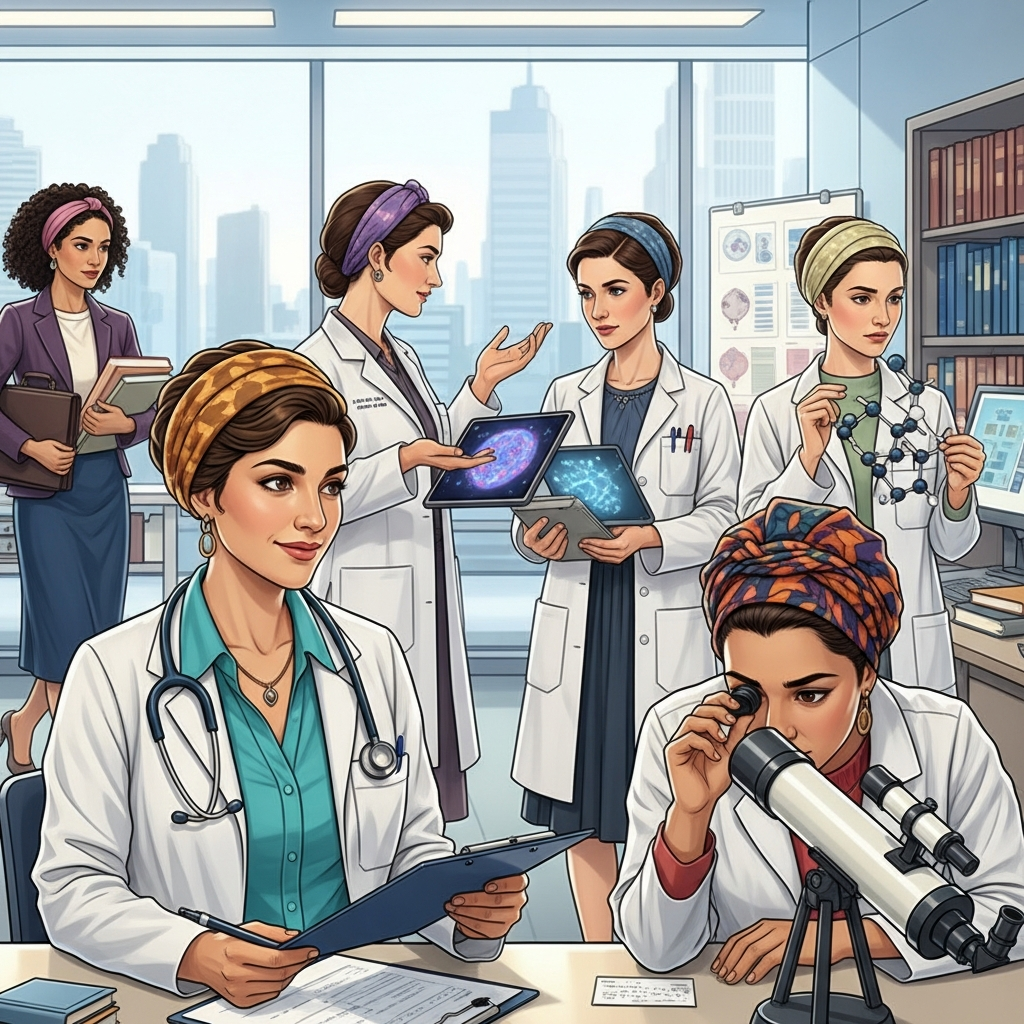
How do we make sure the stories of these amazing women still reach and inspire people in the future? That is what the Jewish Women Series is about. Our goal is to share these stories of courage, smart thinking, and strong will with young readers all over.
We use books and other resources that keep young readers interested. We want kids to know about these strong women. By telling their stories, we hope to spark a love for learning and help young Jewish girls dream bigger and do more in the world.
Welcome to JewishWomenSeries.com. This is where you can find stories that shine a light on amazing Jewish women. On our site, you will learn how these women shaped science, art, and the world around them. We want to help people feel strong by sharing these stories and bringing people together.
At JewishWomenSeries.com, we tell you about our books. You can learn about our Jewish picture books, which are great for young readers. We think it is important for children to see strong women in stories. This helps them feel close to their roots and know what they can do. We are excited to say that we make children’s books about Jewish women in science.
Feel free to look around our website. You can read our blog and find out more about the special women we talk about. Be part of our group as we talk about their stories and help a new group of great people grow. These stories are more than stories about the past. They give us the power we need for today and for the future.
Books are a great way to help young girls meet strong role models. The Jewish Women Series makes books for children that do this. Our Jewish picture books bring stories of amazing Jewish women to young children. These stories are easy to read and fun for young readers.
Many of the stories are about girl power. These show that you can get past hard times and go for your dreams. The books talk about scientists, artists, and leaders. There is a wide mix so every young reader can find someone to look up to. These books are more than just stories. They help build confidence and dreams.
Our group of Jewish Children Books wants to:
The best way to spark interest in science for young children is to let them get their hands dirty with simple, fun activities! When you try things like this at home, it makes it easy for kids to see how science works in the real world. These ideas are based on famous scientists we talked about, like vera rubin and rosalind franklin. They help you learn big ideas without making it hard.
For example, if you want to honor rosalind franklin, you can make a double helix model out of candy and toothpicks. This helps you see how the double helix shape looks. It also shows what rosalind franklin found out with her work. If you want to try something like vera rubin did, you can play with things that spin. This helps you see how objects move and how gravity works.
Here are some easy ideas you can start with:
Having strong role models is very important because it helps young girls go after their dreams. Celebrations like Jewish American Heritage Month give us a great chance to show how Jewish women took a significant role in science and many other fields. This is the time to tell their stories and be proud of what they have done.
When we put a light on these pioneers, we help leave a mark that will inspire others. We need to think about how to honor these women. By sharing their stories, we can help young girls who want to become scientists. This can help them dream big and go after their goals.
Jewish American Heritage Month comes every May. It is the right time to talk about the big things Jewish women did in science. We get to tell their stories and keep their memory alive. It is good to speak about their important work and the top honors they won.
Think about scientists like Gertrude B. Elion, who won the Nobel Prize. Vera Rubin got the National Medal of Science for her work. We also want to remember Rosalind Franklin, whose role was huge, and Rita Levi-Montalcini. She won awards from places like Columbia University.
Want to know how you can join the celebration this month?
This month, let’s shine a light on their hard work and the honors like the National Medal of Science. Help more people know about Vera Rubin, Rosalind Franklin, and the others who made a big mark in science.
We can help girls dream big in science by making a space where their curiosity is welcome. This starts when we listen to what they ask and show that we value their ideas. It helps when we make science look fun, full of new ideas, and a place for everyone.
When girls see a female scientist who is doing well, they start to think, “I can do that too.” If a girl sees someone like her in a lab coat or even an astronaut suit, she may start to believe it is possible for her, too. We need to share more stories of real female scientists and help girls meet these role models when we can.
Here are some easy ways to offer support:
To sum up, the Jewish Women Series shares many stories of strength and success. These stories show just how much Jewish women have given to science and society. They don’t just shine a light on big achievements. They also show why having good role models and mentors matters for the young people who will come next. When we talk about these uplifting stories, we help young Jewish girls see the value in following their dreams and going after work in areas like STEM. As we honor what these women have done, let’s keep working to lift each other up. If you want to learn more about these amazing women, consider buying a box set!
Yes, Vera Rubin was a Jewish scientist. She did work that gave the first signs of dark matter. By looking at how stars far from the center of galaxies moved, she saw that they moved too fast. Vera Rubin said that there must be something we could not see holding these stars in place. Her work helped her become a member of the National Academy of Sciences.
Many Jewish women have done important things in history. Gertrude B. Elion got the Nobel Prize for her work in making drugs that save lives. Rosalind Franklin helped people find out how DNA is shaped through her research. In space, Judith Resnik was one of the first astronauts and flew on the Space Shuttle. She was also the first Jewish woman to travel away from the Earth.
Parents can help girls love science by showing them women role models in the field. They can also connect new science knowledge with Jewish values, like learning and helping to fix the world. It is good to give girls support and look for helpful community programs. Sharing stories about Jewish women who have done well in science can make a big change, not just in high school, but later in life, too.