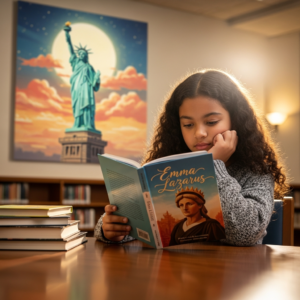

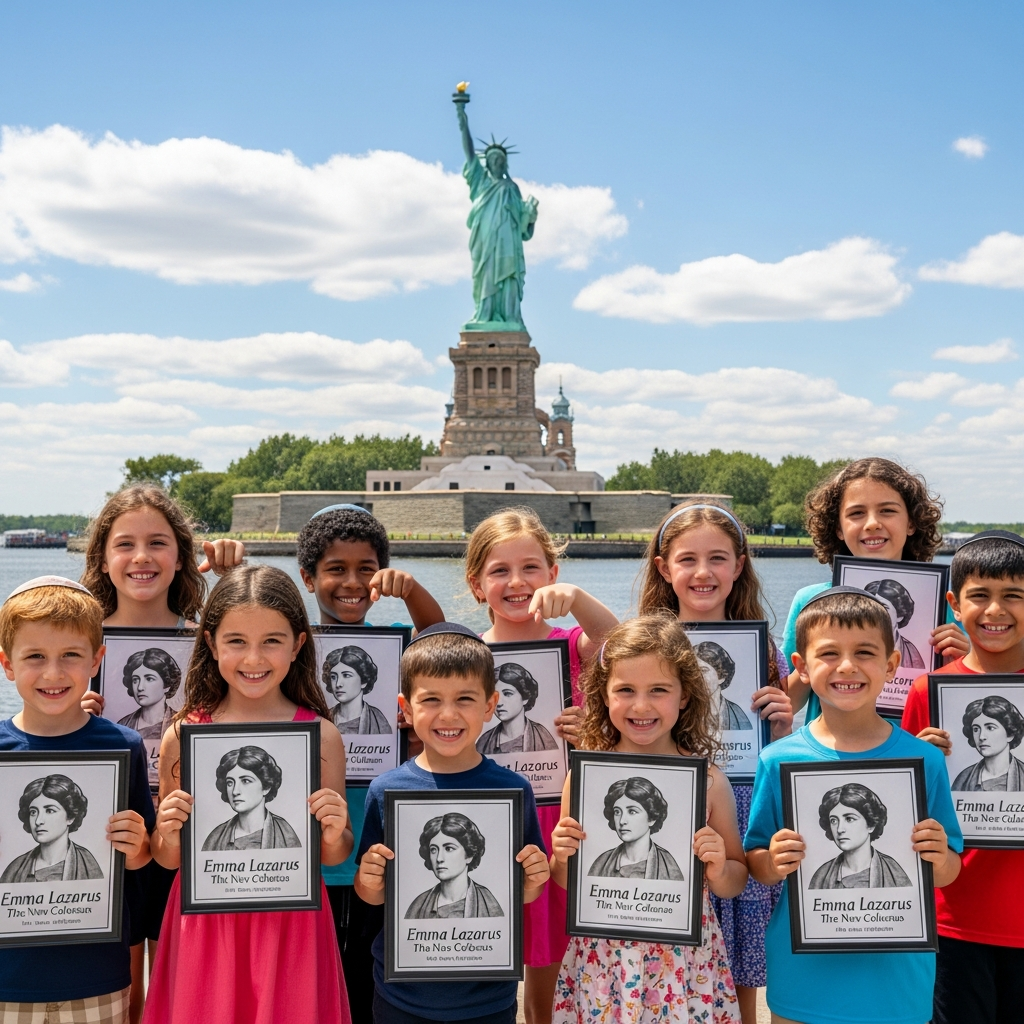
Get ready for World Poetry Day! On March 21, 2026, people will celebrate the magic of poems and how they can change us. The theme this year is “The Power of the Written Word.” It is a good time to show your kids a special poet from New York. Her name is Emma Lazarus. She was a Jewish American woman. Her words gave the Statue of Liberty its voice. In the United States and in other places, her poem stands for hope. Let’s see how a simple poem can help make the world better. For more information, visit jewishwomenseries.com.
World Poetry Day is not just about rhymes. It is about sharing ideas that matter to people. This year, we look at how poems can question societal norms and bring about change in the world. The day helps all of us feel connected with others through words.
For new generations, poetry is a way to talk about feelings and hope for a better world. When we share poems, we show kids that what they say makes a difference. It teaches the young that their words can bring people together from many places in life.
Poetry is a language that brings people together everywhere. It is in busy places like New York and in small, quiet villages around the world. Poems tell us stories about love, losing someone, and hoping for good things. They help us see through the eyes of others and to share what they feel. This helps build understanding between different cultures.
In the United States, poetry gives a way for communities to share what is special about them. It lets new generations know about where they come from and what happened in their country before. Kids reading poems from many cultures can see that, even though our stories can be different, the feelings inside us are often the same.
When we share words like this, poetry shows how strong it can be. It tells us that all people are part of one big family. Our words can bring all of us closer. Poetry is a nice way to show care for others and to teach us about living in the world as one group.
People have used poems as a strong tool to bring change all through history. In hard times, like World War II, many wrote poetry to let out their feelings, fight against unfair rules, and try to give others hope. These poems were more than just lines or words put together. They were brave steps toward making life better.
This is where the idea of “empathetic advocacy” fits in. It is when we use our words to help other people. It means we speak for them and show that we care about their pain and fight. Poetry is a great way to do this. The way poems are written can help people talk about big feelings and new thoughts that truly touch the heart.
When we read poems from the past or about social justice, we feel closer to earlier days. We see why it is important to stand up for what is right. If kids learn about the role of poetry in history, like in World War II, they see their own words can help make the world better, too.
Poetry is important for young children in the United States. In big cities like New York and small towns, it is a fun way for kids to learn about language. They get to find out about rhythm and sound. They enjoy words for the first time through poems. Reading poems out loud helps them get new words and makes their reading skills better.
Poetry is not just for learning. It also helps children talk about their feelings. A short poem can help a child speak about being happy, sad, or even scared. Poems offer a safe way to share big feelings in a creative way. Knowing how to talk about feelings is an important skill as children grow up.
In the end, poetry lets children be creative and share what they think. It teaches kids that their ideas matter. When they write their first poem, they learn that what they say is important. They see that they can share how they view the world, and people will listen.
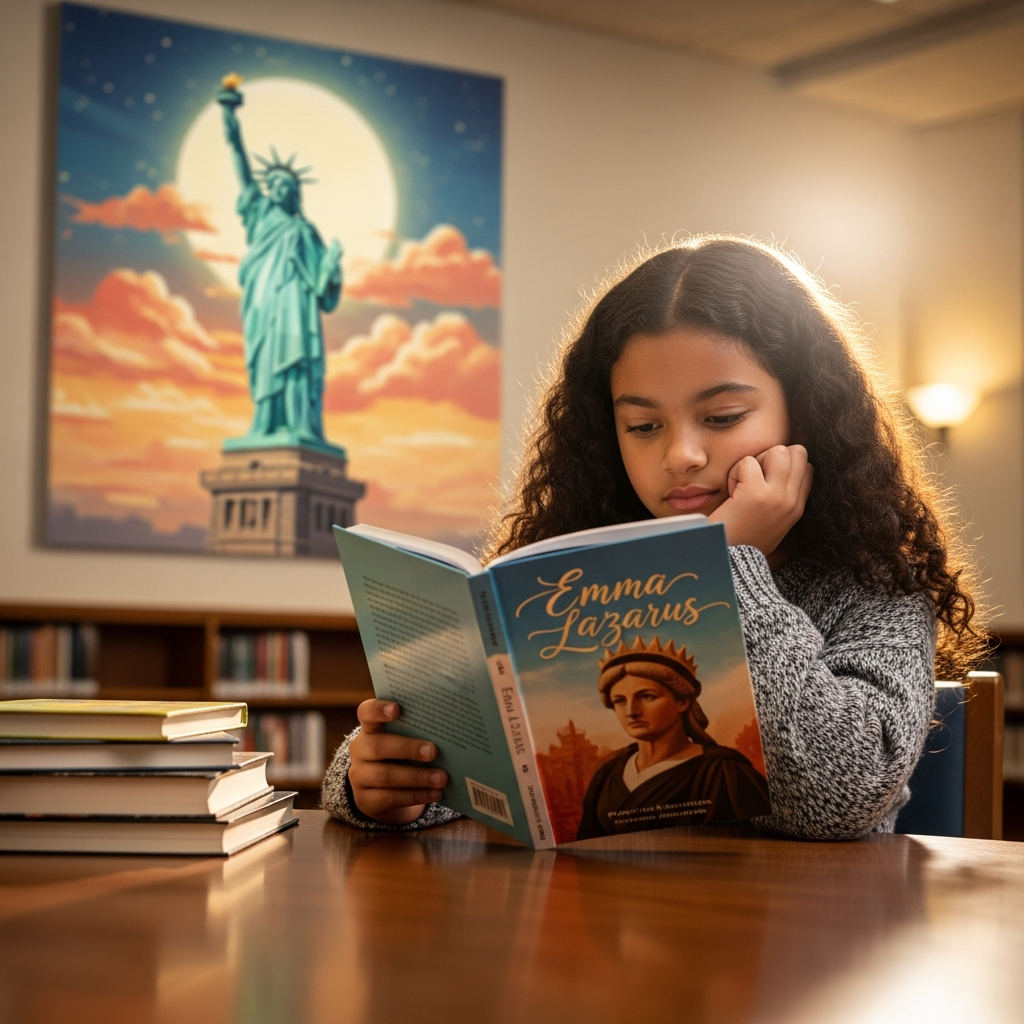 Let’s talk about Emma Lazarus. She is a great poet from New York, and her words are known all across the United States. Her famous poem helped turn the Statue of Liberty from just a present into a sign of welcome for people starting a new life here.
Emma’s life shows how one person’s words can matter for many years. She used her writing to help those who had no voice. Her hope and call to include others still speak to us today.
Emma Lazarus was born in New York City. She was part of a well-known Jewish American family. Her background was a big part of who she was. It shaped much of her writing. She saw Jewish refugees leave their homes to get away from hard times in other countries. Emma wanted to help them.
She felt close to her Jewish roots. This helped her think deeply about fairness and care for others. Emma used her poetry to stand up for immigrants and for those who had no one to speak for them. Her family members helped her follow her love for books and writing. This was not a common thing for women in that time.
Emma was mostly a poet. But kids should know about many famous Jewish women scientists as well. There is Rosalind Franklin, who helped crack the structure of DNA. And Rita Levi-Montalcini won the Nobel Prize for her work. These women, like Emma, changed the world in big ways. Their stories are proof of the good that Jewish women can do.
Did you know that the Statue of Liberty did not always show a message of welcome? When it came to New York, people saw it as a beautiful statue. Emma Lazarus was the one who gave it a story. She was asked to help make money for the statue’s base by writing a poem.
Emma wrote the poem called “The New Colossus.” This poem was so moving that it changed the way people looked at the statue. Emma was not the first woman to write about freedom. But her words made it mean something more for all time.
Later, people put her poem on a plaque in the statue’s base in 1903. Because of Emma Lazarus, the Statue of Liberty became a sign of hope for immigrants coming to America, and it started to greet them as they came to find a new and better life.
“The New Colossus” is a poem that still means a lot today. What is the main message of “The New Colossus” for kids? The message is to welcome people and to be kind. The poem shows the Statue of Liberty as a strong, caring woman. She is called the “Mother of Exiles” because she welcomes people who need a safe place to live.
This statue is not about showing power or being the strongest, which is different from old statues of rulers. She holds up her light to help guide people who are tired or poor so they can find safety. Because of this message, the statue is now a symbol of hope, care, and what the country tries to stand for.
For new generations, the poem from Emma teaches an important lesson that never gets old. We learn that our country grows strong when we have people from many places and when we are ready to help others. Her words tell us to care for people, let everyone feel welcome, and to support those who are looking for a better life.
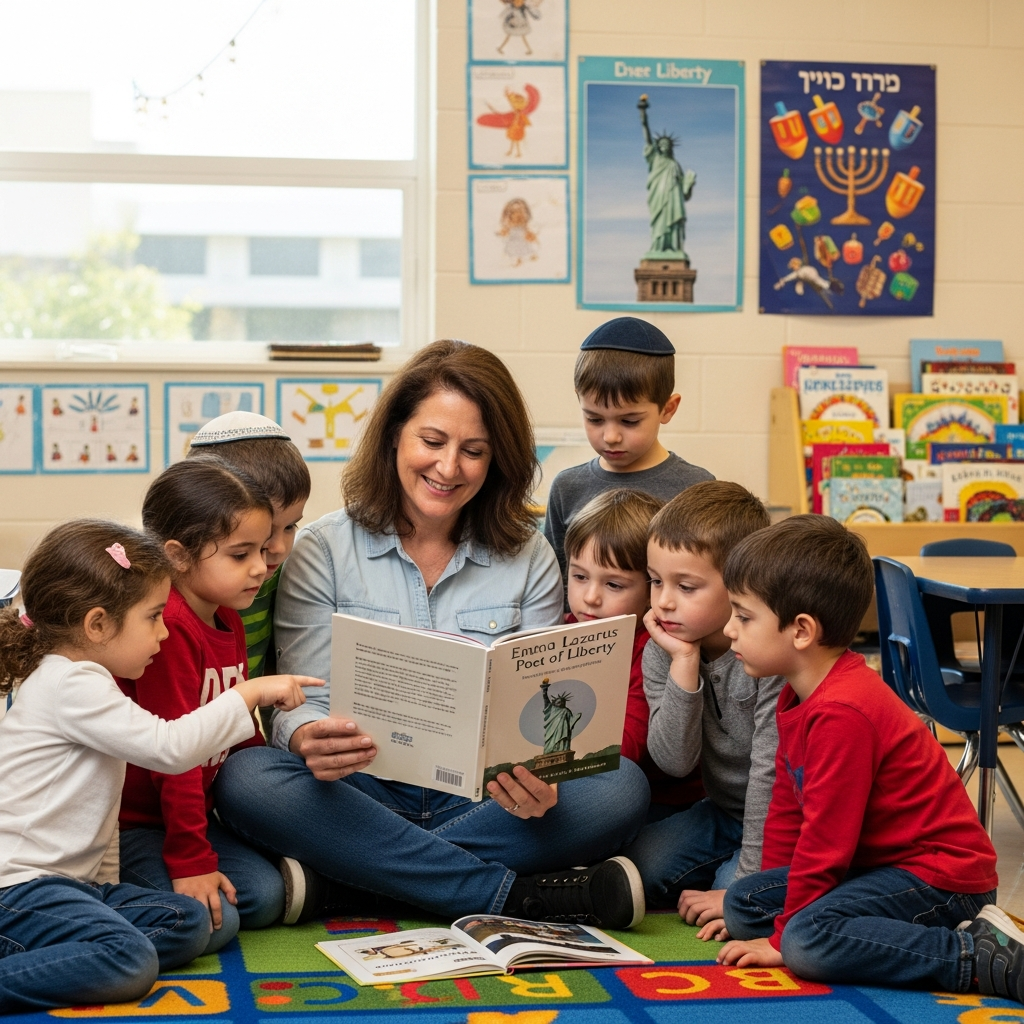
Let’s look at “The New Colossus” and make it simple for kids to get. Emma Lazarus wrote this well-known poem in New York. She spoke for the United States with her words. The poem gives hope and shows a big, warm welcome.
This poem talks about more than just a statue. It’s about being kind and opening our arms to people who need a friend. It’s a simple idea, but a strong one that everyone can get, no matter their age. It’s something we all can share.
“The New Colossus” is a poem where the Statue of Liberty speaks. The poem says that the United States is not like other old places that have huge, scary statues of kings and conquerors. Instead, the nation is here to welcome people.
In the poem, the statue is called the “Mother of Exiles.” She holds up a lamp. This lamp shines as a guiding light for people who are lost, tired, or poor. The lamp is a sign of hope, telling everyone who comes to the United States that a new start waits for them.
Emma Lazarus, with her poetry, shows an image of a nation that helps those who need it. The meaning is clear: you are welcome here. This poem gives a wonderful promise of safety and a chance for everyone.
Emma’s sonnet, “The New Colossus,” is a great way for kids to learn about kindness and including others. It tells us that real greatness is not in being strong, but in being caring. The poem’s “Mother of Exiles” does not care about where you are from. She just wants you to have a safe home.
This strong idea shows children how to welcome new friends at school or in their life. It helps them see everyone as important and worthy of respect. The poem builds a base of understanding and kindness.
Here’s how the poem teaches these good values:
The words in “The New Colossus” can be hard for some kids today, but the most famous lines have a simple and nice meaning. Let’s talk about what they say.
When the poem says, “Give me your tired, your poor, Your huddled masses yearning to breathe free,” it is like the Statue of Liberty is talking to us. She asks people who are having a tough time, and who want to live free, to come and find a new life.
Here are some more lines from the poem and what they mean:
Thanks to Emma Lazarus and her poem “The New Colossus,” the Statue of Liberty in New York has become known around the world as a sign of welcome. When immigrants came into New York Harbor, the statue was one of the first things they saw. It showed them the hope of a new life in a free place.
The statue’s message is not only for those coming from other countries. It also reminds people living in America to welcome and be kind to newcomers. It stands for the idea that our nation was built by people from many places.
Today, the Statue of Liberty still gives hope to people. Because of “The New Colossus,” her meaning is always remembered. She is a lasting symbol of welcome, holding her torch up for everyone to see.
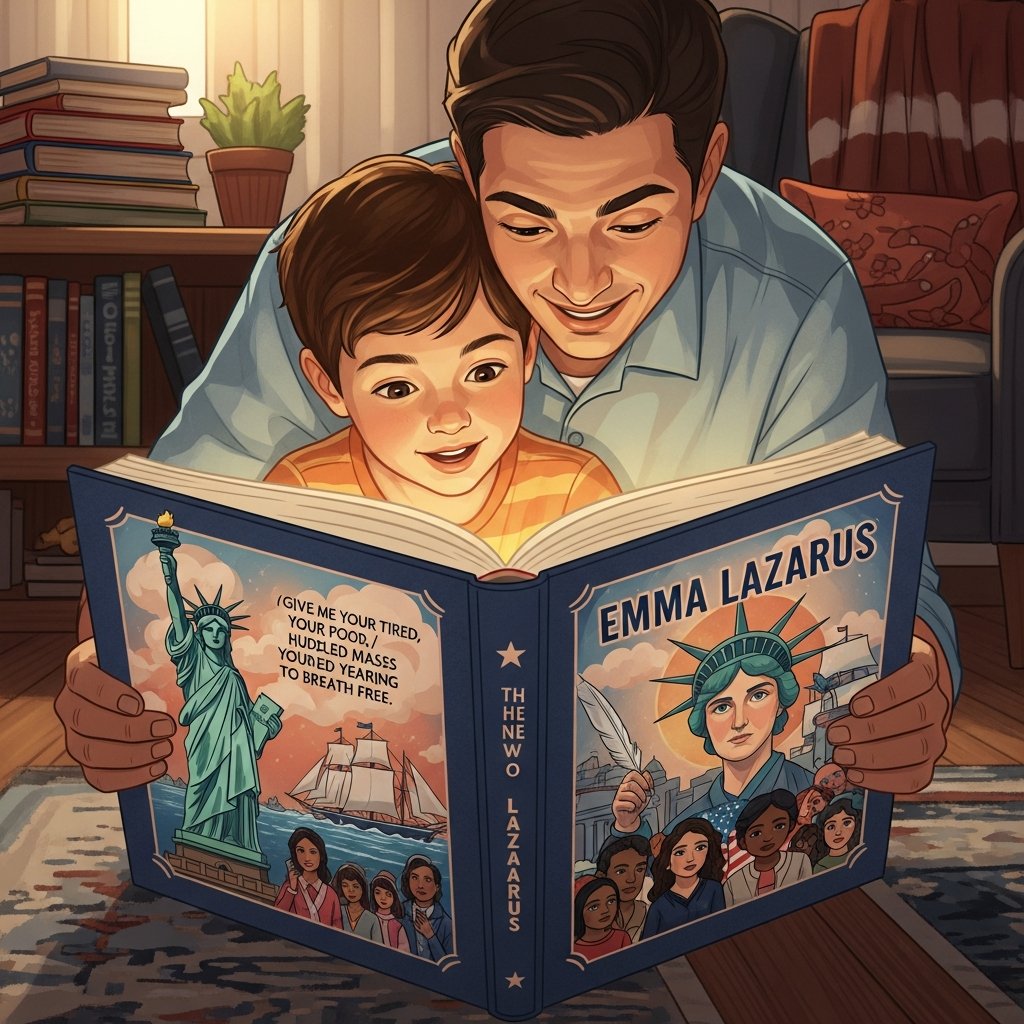 The Jewish Women Series is made to share stories of remarkable Jewish women with the next group of kids. The books are put together with care. They help young children learn about people who made good changes in the world.
These stories use simple words and bright pictures. The life stories feel real and fun. Kids get to know strong female role models. They also learn about not giving up, being brave, and how to help others. These Jewish picture books are great for families to read as a group.
JewishWomenSeries.com is a good site for families who want to read true stories. You will find many Jewish Children Books there. These books show the amazing things Jewish women have done in history. You can read them to your kids and talk about their message.
There is more on the site than just books. You can find things to do and simple facts that help bring these stories out. This makes history fun for young children. Are there any children’s books about Jewish women in science? Yes! There are stories about women in many fields. This is a good place to start if you want books that help kids take interest in science and other topics.
Going to JewishWomenSeries.com helps families feel close to their roots and meet good role models. These stories can help your kids see that they can do big things one day, too.
One of the best parts of the Jewish Women Series is the story of Emma Lazarus. The book is full of beautiful pictures that really bring her world to life. These colorful and fun illustrations show the spirit of her time. Each page is great for young readers, helping them feel close to the characters and learn about history.
The story tells about Emma’s life. It starts with her childhood and her loving family, all the way to when she wrote her famous poem. The pictures show how much passion and drive she had. Emma becomes someone that kids can understand and feel inspired by. Every page is made to grab your child’s attention and make reading fun.
These stories are not just for fun. The mix of a strong story and bright pictures make Emma Lazarus and her story hard to forget. This book is a good way for young readers to learn about her, her legacy, and how much words can do.
Stories are a great way to help kids learn about empathy and standing up for others. When children see characters deal with problems and do what is right, they start to see how they can do the same in their own life. These stories help them understand how other people feel and show them how to care for others.
The stories in the Jewish Women Series are made to do this job. The books show real women using their skills to make things better for the world. When kids see all this as it happens, they feel ready to try and help others themselves.
Here’s how stories help kids learn:
Books are important for helping young girls build self-confidence. When they see characters who look like them or think like them doing big things, it gives them hope. It shows them, “You can do it, too!” These stories help girls see what they can become.
The Jewish Women Series is full of strong and smart women who do brave things. These books let young girls know that what they say, think, and dream about really matters. By seeing women win in fields like literature, science, and activism, girls get the push they need to follow what they love and not be afraid.
When girls read these books, they learn that they do not need to act or look a certain way. They can be leaders. They can make and build things. They can make change in the world. Feeling good about who they are is a big gift that books can give to boys and girls. It helps them go after a bright and happy future.
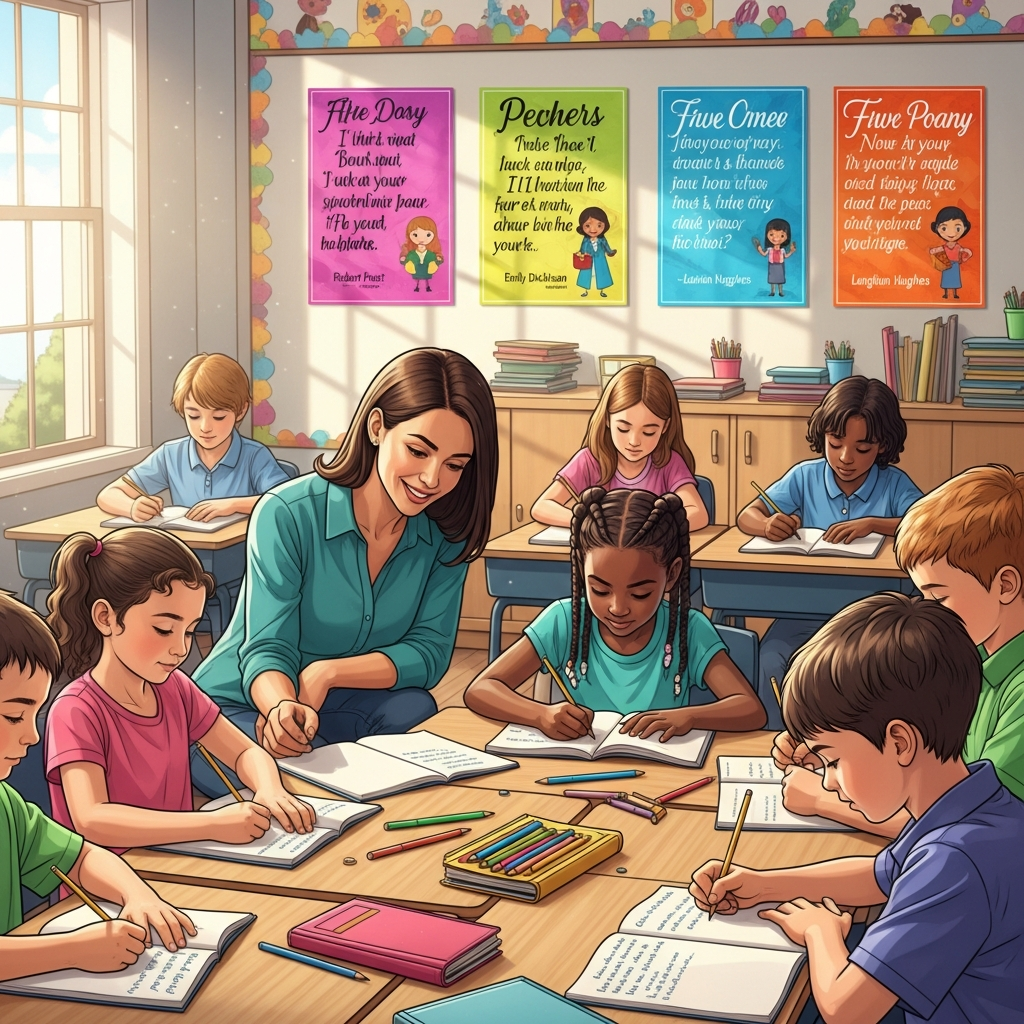 Teaching “empathetic advocacy” may sound hard, but it is really about showing kids how to use words to help others. Poetry is a great tool for this. It lets kids connect with their feelings in a deeper way, so they can be more kind and caring.
Poetry helped people share hope during World War II. In the same way, it can teach kids today to stand up for what is right. By reading and talking about poems, kids see how their words can help, comfort, and make good changes in the world.
Poetry can give comfort when times are hard. It can feel like a warm hug. The poem tells someone they are not alone. The sound and the beat in poetry can help bring a calm feeling when life is messy.
Poetry helps people feel welcome, too. Emma Lazarus’s poem made immigrants feel wanted. Sharing a poem with a new friend can help them feel part of the group and special. This is a small act of kindness for someone who feels left out.
Poetry can also drive people to be leaders. A strong poem brings people together. It helps everyone speak up for a shared goal. It shows kids that picking words with care can help others and make the future kinder for all of us.
Poems are a safe and creative way to talk about hard emotions. Kids may not always know the right words to say how they feel. When they read or write a poem, it can help them put sadness, anger, or fear into words.
When kids read poems about these feelings, they see that it’s okay to have them. It helps them know they are not alone. This helps start open talks about feelings. It is also a way for kids to learn to speak up for what they need.
Here are some ways you can use poems to talk about emotions:
It is good to help new generations see that their words can make things better. Fun things to do can turn this idea into a lesson that they will remember. These activities show kids how what they say or write can really change others and the world around them.
You can keep these activities easy, and do them at home or at school. They help kids think of new ideas, work together, and learn that all their voices together can do more than just one.
Here are some ideas:
These simple activities help new generations learn that what they say or write can make things better for everyone.
 Let’s take some time to talk about the amazing things that Jewish women have done in literature and science. They write strong poems. They have also made big discoveries in science. Because of these women, the world is a better place. Their lives show passion, smarts, and the will to keep going.
When we learn about these inspiring people, we respect what they did. We also give new role models to young people. They show us that if you keep trying, you can get past hard moments and create something special for everyone.
Many inspiring Jewish women have made their mark on history. In literature, Emma Lazarus used her words to champion the rights of immigrants. In science, women like Vera Rubin expanded our understanding of the universe. Which Jewish women scientists should be celebrated during Jewish American Heritage Month? The list is long, but includes figures like Rosalind Franklin and Rita Levi-Montalcini.
These women broke barriers and challenged expectations. They pursued their passions in fields often dominated by men and left behind legacies that continue to inspire us. From poetry to physics, their work has had a profound impact.
Here are a few remarkable Jewish women in literature and science:
| Name | Field | Known For |
|---|---|---|
| Emma Lazarus | Literature | Writing “The New Colossus,” the poem on the Statue of Liberty. |
| Rosalind Franklin | Science | Her critical contributions to understanding the structure of DNA. |
| Rita Levi-Montalcini | Science | Discovering the nerve growth factor, earning a Nobel Prize. |
| Bessie Moses | Science | Pioneering birth control access and women’s healthcare. |
Jewish women in science and literature have faced many barriers over time. In the science field, they had to deal with both sexism and antisemitism. Sexism made it tough for women to get jobs and respect. At the same time, there was hate against Jewish people, which kept them from chances they deserved. In the years around world war ii, this was even worse. For example, Rita Levi-Montalcini was not allowed to work in Italy because of anti-Jewish laws.
These women did not give up. Rita Levi-Montalcini set up a lab in her bedroom to keep working on her research, even if she had to do it in secret. Rosalind Franklin was another example. She kept on with her work, even when her male coworkers did not give her credit for her help with the DNA structure discovery.
This group of women showed great determination and love for their work. They had help from their families and others. They made their own paths forward. Bessie Moses started her own clinic so she could work and help people. They did not let prejudice win, and their stories teach us about sticking with goals. Their ability to push through tough times is a good example for all of us.
Telling simple stories about famous Jewish women is a good way to help kids learn about these role models. You do not have to talk about hard details. These stories can show their courage and big wins in ways kids can get and remember.
For example, you can talk about Emma Lazarus. She wrote a special poem that helped the Statue of Liberty make people feel welcome and safe. You can also share the story of Rita Levi-Montalcini. She loved science so much, she made her own secret lab in her room just to keep learning.
These easy stories bring history to life for kids. The kids can see that real people like them, with hard work and passion, can do great things. The Jewish Women Series is made for young readers. It tells these kinds of simple and inspiring stories in a way that’s perfect for them.
Are you trying to find science activities for kids that are based on Jewish women scientists? You can turn what these women have done into fun, hands-on science experiments. These activities help make science interesting for kids. They also connect kids with the lives and memories of these smart and hardworking women.
For example, you can tell kids about Rosalind Franklin. Then, build a simple DNA model to show what she studied. She worked with the structure of life, so doing a project can help kids really see and touch what it means.
Here are a few more ideas for science activities:
 Are you ready to enjoy poetry? There are many fun things that families and teachers can do to show how great words can be. These plans are good for kids of all ages. You do not need any special skills to join in. You just need a bit of imagination.
You can write silly rhymes or have a family get-together for poetry. These ideas can help you make poetry fun in your everyday life. Let’s get creative and look at the world of poems together.
Writing poetry with young children should be fun. It is about letting them say what they feel. Don’t worry about rules. Don’t try to make it perfect. The main goal is to help them love words and feel good about their own ideas.
You can start by talking about what your child likes. It could be their favorite animal, color, or food. That way, they have something easy to write about. Keep things simple. Focus on what they see, hear, and feel.
Here are some ideas to help you:
Rhyming games be a good way to get kids into the sound and feel of poetry. The games are fun and easy. They help grow skills for reading, like knowing how sounds in words work. You can use them anywhere, like in the car, at dinner, or before bed.
Telling stories together also helps kids with talking and learning new words. The group can start with one line. Each person then adds a new line. This idea helps with paying attention and thinking of new things.
Try these fun ideas:
Make World Poetry Day even more fun by planning a family poetry celebration. This is a great way for everyone to be together, share what they create, and enjoy the magic of words. You can decide if you want to keep it simple or go all out.
Try to make the space filled with warmth and support so that everyone feels at ease when they share. You can put up some decorations in the living room, make some tasty snacks, and get ready for a family day you will remember.
Here’s how you can prepare for your poetry celebration:
Role models matter a lot for young girls. They get to see women who are brave and do well, which shows what can be done. It can push them to dream big. The stories of remarkable Jewish women offer strong examples of leading others and staying strong.
When girls hear about women who go through tough times and reach their goals, it makes them feel good about themselves. They know their dreams can happen. This helps them want to follow what they love in any area.
Jewish women have played a big part in many areas. Their work has left us with real change and new ideas. They made a difference in politics, activism, science, and the arts. The work they did helped shape the world we live in today. These women led others not by just wanting power, but by using what they had to help people and fight for a better life.
Many people know about women in writing and health care. But do you know which Jewish women helped in space exploration? Judith Resnik was a skilled engineer. She was also one of the first American women to go into space. Judith’s story helps many young girls believe they can go after big dreams, even in space.
What these leaders left behind is about more than just their awards. It is also about how they opened new doors for the next group to walk through. They set aside limits, spoke up against wrong ideas, and showed that women can lead anywhere. Their lives are proof that hard work and hope can move us forward.
One great way to help girls, especially Jewish girls, get interested in science is to show them role models they can look up to. Talk to them about successful Jewish women in science, like rosalind franklin or Rita Levi-Montalcini. Their stories let girls know they can do great things in these fields, too.
It is also important to make science and books fun and easy to enjoy. Go to museums together. Try easy science experiments at home. Read books with smart and curious girls as the main characters. Build a space where asking questions and trying out new ideas is something to be happy about.
The most important thing is to back up what they love to do. If a girl likes to build things, get her a kit for building. If she likes to write, buy her a nice notebook. When you help girls follow what they are curious about, you give them the chance to do amazing things, in both science and books.
Sharing simple facts is a good way to teach kids about famous Jewish women. Easy-to-remember facts help kids learn about what Jewish women did in science. These facts make these women feel real to young children. They can be fun to learn and easy to talk about with friends.
It is better not to talk about hard science ideas. Talk about the things these women did and the things they found instead. Kids can feel close to these women and remember what they did.
Here are a few fun facts:
Poems are not just words on a page. They can be a light when things feel dark. A good poem can show a feeling, a hope, or a big idea and let people everywhere see it. Poems can lift new generations, showing them that they can dream of a better tomorrow. It also tells them that they have the power to help build that future. For example, Emma Lazarus wrote a sonnet that gave hope to many people.
Talking with children about poems and what they say is a great way to get close to them. It shows kids that poetry is not only something for school but is real and can be a part of their life. It can lead to talks about kindness, justice, and hope. When you talk about poems together, you open the door to new ideas. It gives children the chance to find their own voices, too.
Sharing the story of Emma Lazarus at home or in school can be both fun and meaningful. At home, you can begin by reading her story together. The illustrated book from the Jewish Women Series is a good way to learn about her life and work in a way kids can enjoy.
After reading, talk with your children about the meaning of “The New Colossus.” Ask them what “welcome” means to them. You can also talk about how they can help new friends feel comfortable. It can be fun to make a “welcome” sign for your home, using ideas from her poem.
In school, teachers can use Emma Lazarus’s story in poetry, history, or social studies classes. Students can write short poems about what “welcome” means to them. They can also look up and learn about people who came to America as immigrants. The idea of emma lazarus gives all of us a good way to learn together and talk about important stories.
Letting children find their own voice is one of the best things we can give them. This means teaching them that what they think and feel is important, and they get to share these things. When you give them power in this way, they become more sure of themselves and have a better shot to grow into strong adults who can say what they mean.
One good way to do this is by giving kids a safe place where they can say what they think. There should be no judgment. Listen well when they talk, let them know you hear them, and tell them it is okay to ask questions. Show them their view matters.
Stories and poems can also help kids feel stronger. When they read about people who use their voices to help or change things, it makes them want to try, too. Ask kids to write, draw, or talk about what they care about. This lets them see the power of their own voice.
Helping kids enjoy poetry means taking away fear and worry. Let go of thinking that poetry needs to be serious or tough to understand. It can be silly, easy, and a lot of fun. The main thing is to reach kids in a way that they can get.
You can help kids by linking poetry to what they like. If someone likes dinosaurs, look for poems with dinosaurs in them. If they enjoy singing, check out song lyrics because they are also poems. Another simple way to start is to use a story. For instance, you can share the story about Rita Levi-Montalcini, a Jewish woman scientist, who built a lab in her bedroom. It is easy, inspiring, and kids will understand it.
Here are some more tips for you to use:
To sum up, World Poetry Day is a great time to celebrate how poems can touch our lives, with Emma Lazarus being a wonderful example. When we learn about her life and read “The New Colossus,” we see how strong words can be in building care and bringing change. Talking to young readers about poetry not only helps them be more creative, but also teaches them to be kind and welcome others. Families and teachers can use this day to share Emma’s message and show why poems matter. If you want to learn more or help young voices grow in your area, feel free to reach out to us for tips and support. You can also order a box set from jewishwomenseries.com and check out our social media for fun videos and activity ideas.
For kids, the big idea of “The New Colossus” by Emma Lazarus is to show kindness and welcome. The poem makes you think of the Statue of Liberty as a loving mother. She is calling people from every place to come to the United States. She wants them to find a safe and bright new home.
JewishWomenSeries.com has a kids’ book about Emma Lazarus. The book is full of colorful pictures. It tells her story in a fun and simple way that younger people will like. This book is great for families to enjoy together. It helps all of us learn about strong women like Emma Lazarus.
Young readers should learn about Jewish women in science like Rosalind Franklin, who helped find the shape of DNA. They can also look up to Rita Levi-Montalcini, who won the Nobel Prize for her work on how nerves grow. These women show us that when you are curious and work hard, you can do great things in science.